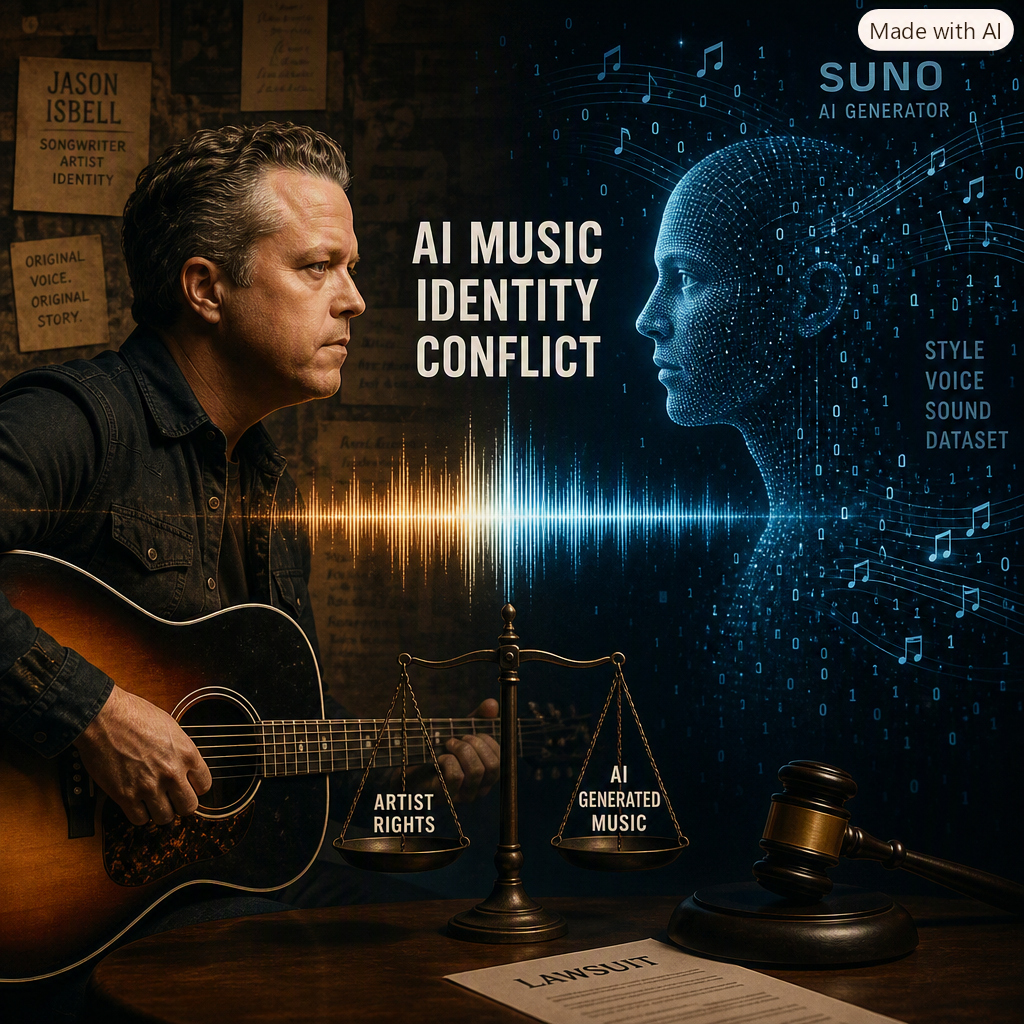
Singer-songwriter Jason Isbell is leading a group of musicians in a lawsuit against AI music generator Suno, arguing that the company has misappropriated their identities, not merely infringed on their copyrighted work. The suit, filed in U.S. District Court in Massachusetts, includes fellow artists David Lowery, Guy Forsyth, and Eduardo Calle.
The musicians claim Suno enables users to generate songs that mimic their distinctive styles—effectively allowing the AI to “steal” their artistic personas.
An Unusual Legal Strategy
What sets this lawsuit apart is its framing. Rather than opening with traditional legal arguments, the filing begins with an essay about the Borg, the identity-consuming villains from Star Trek: The Next Generation.
The Borg metaphor is used to illustrate what the artists see as a fundamental violation: the absorption and repurposing of individual creative identity by a machine intelligence.
“Autonomy is consumed and repurposed in the service of a cold machine intelligence,” the filing states.
The lawsuit argues that Suno has built a “vast database of tokens” capturing the identifying attributes of musicians—attributes the plaintiffs say remain their property, regardless of the technology involved.
RELATED: Is AI Music the Next Pop Trend or Just More Noise?
In their view, Suno’s system allows users to generate music that sounds like Isbell or Lowery without permission, compensation, or acknowledgment. The filing asserts that musical identity is a form of intellectual property that should be protected just as rigorously as copyright.
Why This Matters for the Music Industry
This case arrives at a moment when AI-generated art is accelerating faster than legal frameworks can adapt. By focusing on identity rather than copyright, the artists are pushing courts to consider whether a musician’s style—distinctive phrasing, tone, or creative fingerprint—can be protected from algorithmic replication.
If successful, the lawsuit could set a precedent that reshapes how AI companies train models and how artists safeguard their creative personas.
The plaintiffs are seeking class-action status and unspecified damages, signaling their intent to broaden the fight beyond their own work and toward industry-wide protections. Regardless of the outcome, the case underscores a growing tension: as AI tools become more powerful, artists are increasingly demanding boundaries that preserve the integrity—and ownership—of their identities.
H/T Fast Company
IMAGE: Thanks Bing