Some artists feel like they are trying to command a room. Audrey Hobert feels like someone sitting across from you at a kitchen table, telling stories that are half confessional and half inside joke. Often described as “pop’s girl next door,” she has built a reputation for songs that feel understated but emotionally sharp, the kind of tracks that reveal new layers the longer you sit with them.
Her debut album Who’s the Clown? introduced her to a wider audience and earned her a place on this year’s Forbes 30 Under 30 list, but the recognition feels almost secondary to the atmosphere she creates. Rather than chasing dramatic production or viral spectacle, Hobert leans into simplicity. Acoustic textures, conversational lyrics, and moments of awkward honesty give her music a sense of closeness that resonates with listeners looking for something quieter.
Writing That Feels Like a Conversation
Comparisons to Gracie Abrams come naturally, especially in the way Hobert writes about relationships with a sense of emotional restraint. Her lyrics rarely feel oversized. Instead, they capture small details that hint at bigger feelings. A line about a missed text or a passing glance can carry the emotional weight of an entire chorus.
Tracks like “Gabriela” showcase her ability to tell stories without over-explaining them. The song moves gently, letting the listener piece together its meaning through subtle shifts in tone. “J*b,” meanwhile, offers a more self-aware perspective, balancing humor with vulnerability in a way that feels distinctly her own.
There is a certain bravery in that restraint. In an era where pop often leans toward maximalism, Hobert’s music feels intentionally minimal, as if she trusts silence as much as sound.

Lauren Muses:
Honestly, she feels like the friend who says the quiet thing out loud and suddenly everyone stops talking. I did not expect to sit with these songs as long as I did, but here we are. What does that say about me, I wonder?
Humor as a Creative Tool
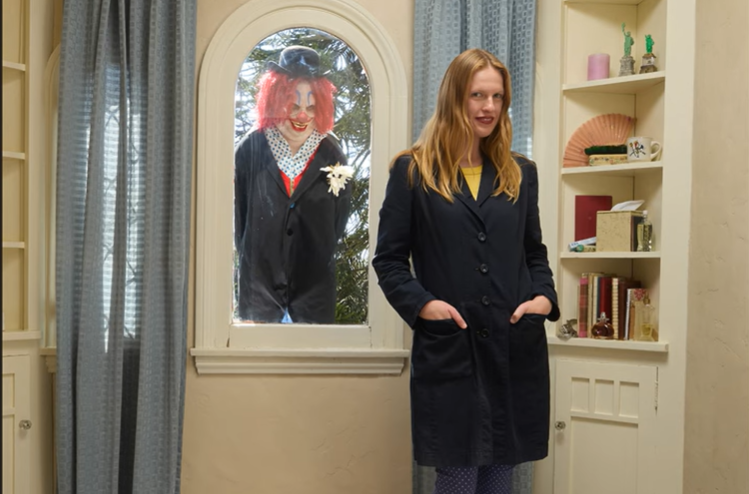
One of the defining traits of Hobert’s work is her sense of humor. Even when her songs explore uncertainty or self doubt, there is a lightness that keeps them from feeling heavy. The title Who’s the Clown? hints at that balance. It suggests a willingness to laugh at oneself while still taking emotions seriously.
That tone resonates with a generation of listeners who appreciate honesty without melodrama. Hobert’s delivery often feels like a private thought spoken out loud, creating a connection that feels less like performance and more like shared experience.
Her rise also reflects a broader shift within pop music. Audiences increasingly gravitate toward artists who present themselves as relatable rather than distant. Hobert’s understated presence fits naturally into that cultural moment.
Growing Into Her Own Space
While early comparisons helped introduce her to new listeners, Hobert seems to be carving out a distinct identity. Her songwriting suggests an artist more interested in long term storytelling than immediate chart success. Each track feels like a chapter rather than a standalone statement.
Industry recognition such as the Forbes 30 Under 30 list adds visibility, but her appeal lies in something less tangible. She creates songs that feel lived in, as though they exist outside the pressure of constant reinvention.
The production choices on her debut album reflect that philosophy. Arrangements remain sparse, allowing her voice and lyrics to carry the emotional core. This approach may not always dominate streaming algorithms, but it builds a sense of authenticity that can foster lasting loyalty.
A Voice That Feels Familiar
Listening to Audrey Hobert often feels like discovering an artist you have known longer than you actually have. There is a warmth to her delivery that invites listeners into her world without demanding attention.
As she continues to evolve, the question may not be whether she becomes a mainstream pop fixture but how she maintains the intimacy that defines her sound. If her debut is any indication, Hobert is less concerned with chasing trends and more focused on creating songs that feel genuine to her experience.
That quiet confidence may be exactly what sets her apart. In a landscape filled with louder voices, Audrey Hobert’s strength lies in the moments when she chooses to speak softly and let listeners lean in closer.