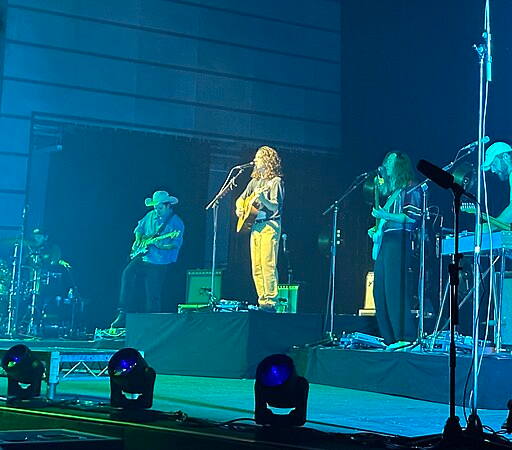
There’s a particular kind of embarrassment that comes with discovering something everyone else already loved. You stumble into a band’s fourth album, years after they’ve already built their fanbase, performed alongside household names, and quietly perfected their craft. You feel silly for being late. You wonder why you missed it. And then—if the music is really good—none of that matters anymore, because something in you finally recognizes what was always there, waiting.
That’s what happened to me with Peach Pit’s Magpie.
The Band That Took “Generic” and Made It Sophisticated
There’s poetry in Peach Pit’s origin story. After performing at a Battle of the Bands early in their career, they received brutally honest feedback: they were a generic indie rock band. Rather than slink away in shame, the Vancouver group leaned into it. They named their debut Being So Normal—a wry middle finger to criticism that somehow became a springboard. Columbia Records saw something beneath the surface, signed them, and the rest, as they say, is history.
But here’s the thing about Peach Pit: they were never actually generic. They just looked like every other guitar-driven indie rock band on the surface. Four albums in, with Magpie, it’s impossible to miss what’s really going on beneath the laid-back exterior.
When You Finally Hear It
The album opens with “Every Little Thing,” and immediately you understand why this band has quietly built something worth paying attention to. There’s nothing flashy about the entry point—singer Neil Smith’s vocals float effortlessly between his natural tone and falsetto, almost slacker-like in their delivery. The guitar work by Christopher Vanderkooy carries a chorus-laden melody that should feel familiar, comfortable, safe. But then the band deliberately drops a beat during the guitar lead, injecting something playful and quirky into the familiar. They’re already refusing to be pinned down.
This is where the sophistication reveals itself. Peach Pit work with chord progressions that shouldn’t work but do—borrowed chords, altered changes, harmonic territory that feels unexpected the first time you hear it. With each listen, new possibilities unfurl. What seemed alien on first contact becomes endearing, intricate, yours.
The Tracks That Make You Move
“Yaasmina” sways at a deliberate pace, building momentum until Vanderkooy’s fiery guitar solo explodes with overdriven energy and raw intensity—the kind of moment that reminds you why you fell in love with rock music in the first place. “Outta Here” opens with fingerpicking on acoustic guitar before developing into a slick groove, the bass and drums thumping beneath it all, a violin appearing at the bridge like a secret being whispered. There’s a key change that sharpens into focus, followed by a guitar solo that catches you mid-breath.
Then there’s the title track, “Magpie,” starting dark and driving before the chorus unexpectedly lifts in brightness, only to quickly return to the minor key. It’s a band that understands restraint, that knows the power of the unexpected moment precisely because they’ve earned it through subtlety and nuance.
Even “Am I Your Girl,” which feels structurally simpler than its neighbors, carries something haunting—a slow, brooding modal vamp that feels almost like vaporwave filtered through organic instrumentation. The electric bass and drums ground it in something real, something you can feel.
Why I’m Late, and Why It Doesn’t Matter
The question isn’t really why I discovered Peach Pit so late. The question is what took me so long to listen. The answer is probably the same for a lot of us: there’s too much music, not enough time, and the surface of something can be deceiving. A band that looks indie-rock-by-the-numbers can hide the fact that they’re actually deeply thoughtful songwriters, that their sophistication isn’t flash but substance, that they’ve spent years perfecting something that sounds effortless.
Magpie is proof that you don’t need innovation to matter. You need intention. You need band members who understand that a complex chord progression isn’t showing off—it’s a way of expressing something that simpler progressions can’t quite reach.