Over the past twenty years, the music industry has undergone a complete transformation. Physical album sales and digital downloads have largely given way to streaming, which now dominates how people access and pay for music. Recent figures highlight just how deeply streaming has reshaped the business model for artists, labels, and publishers alike.
Streaming Now Powers the Industry
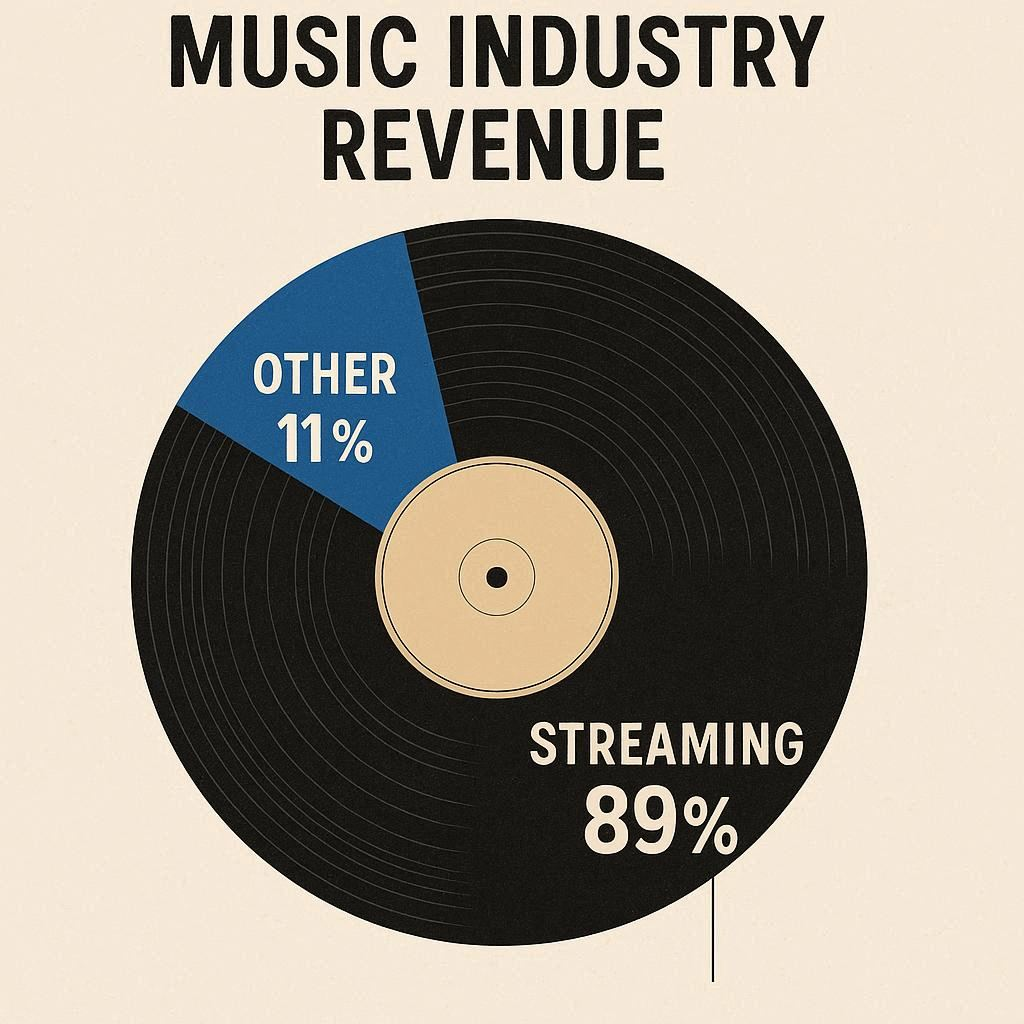
Streaming platforms now generate roughly 89% of the music industry’s total global revenue—nearly nine out of every ten dollars earned. Services like Spotify, Apple Music, and Amazon Music aren’t just popular listening options; they form the core of the industry’s financial ecosystem. For anyone involved in making or distributing music, streaming has become indispensable.
The IFPI Global Music Report shows that streaming revenue grew 10.4%, slightly higher than the 10.2% overall industry growth. That marks the ninth consecutive year of global expansion for the recorded music market. The steady climb underscores how both mature and emerging markets continue to embrace streaming—through paid subscriptions and ad-supported listening alike.
A $19 Billion Revenue Powerhouse
What began as a digital experiment to replace CDs and MP3 downloads is now a global revenue engine worth more than $19 billion annually. Since streaming first gained traction in the mid-2000s, its growth trajectory has been relentlessly upward. Each year, the format cements its position as the dominant source of income for the entire industry.
Streaming’s dominance offers clear advantages: consistent recurring income, easy scalability, and worldwide reach. Yet it also brings challenges, from questions about royalty fairness and artist pay to concerns over the influence of a handful of major platforms.
Still, one fact stands out—streaming isn’t the next phase of the music industry. It is the music industry. With close to 90% of total revenue tied to it, today’s business is built squarely on digital access and subscription-based consumption.