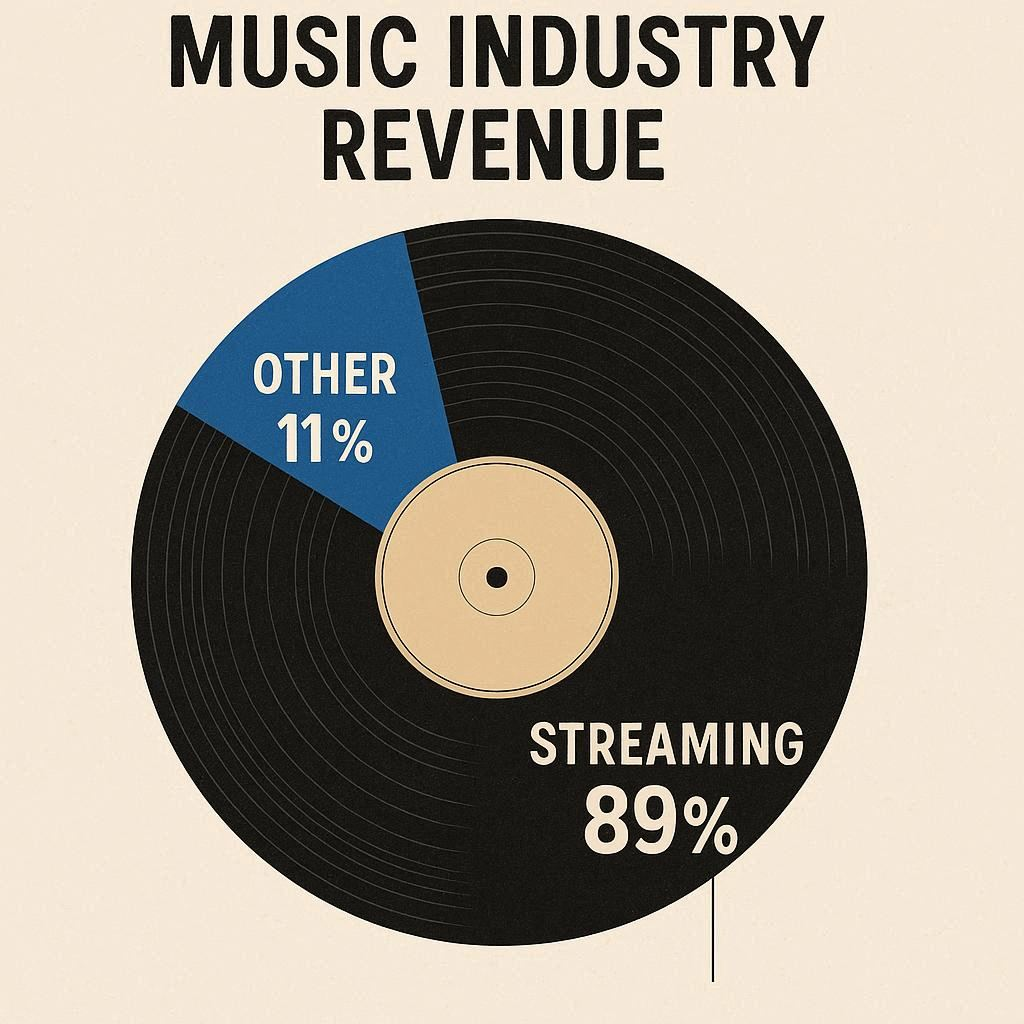
The music industry reached a major financial milestone in 2025 as Spotify announced it paid more than $11 billion to the music ecosystem, marking the largest annual payout from any single retailer in music history. The figure represents more than a 10% increase from the previous year and highlights how streaming continues to reshape the economics of recorded music.
Spotify now accounts for roughly 30% of global recorded music revenue, positioning the platform as a primary driver of industry growth. According to company leadership, payouts grew faster than many other revenue streams, reinforcing streaming’s central role in artist income.
Yet while the headline number signals progress, it also underscores a complex reality. The modern music landscape is expanding rapidly, with more than 100,000 new songs uploaded daily. For artists, increased revenue opportunities come alongside intensified competition and rising pressure to stand out in an increasingly crowded digital marketplace.
More Artists Earning, But More Competition Than Ever
One of the most notable claims from Spotify’s report is the growing number of artists generating meaningful income. Company executives said there are now more musicians earning over $100,000 annually from Spotify alone than the number of artists who were stocked on record store shelves during the peak of the CD era.
Independent artists and labels accounted for roughly half of all royalties distributed on the platform, highlighting the democratizing effect streaming can have for creators outside the traditional label system.
Still, growth in artist earnings does not eliminate structural challenges. The sheer volume of releases means emerging musicians face unprecedented hurdles in building early fanbases. In many ways, the streaming era has shifted the industry from one defined by scarcity of distribution to one defined by scarcity of attention.
Storytelling and Video as Key Growth Strategies
Looking ahead to 2026, Spotify says it plans to invest heavily in tools designed to help artists connect more deeply with listeners. A major focus is storytelling through expanded artist context, including new features such as SongDNA, which aims to highlight creative collaborations and provide fans with deeper insight into the music-making process.
Video content is also becoming central to the platform’s strategy. Rather than emphasizing high-budget production, Spotify appears to be leaning into authenticity, promoting rehearsal clips, live performances, and behind-the-scenes moments that foster stronger fan engagement.
The approach reflects a broader shift across the industry: as AI tools make content creation easier, platforms are betting that human stories and artist identity will become even more valuable.
Protecting Artist Identity in the Age of AI
Another major theme emerging from Spotify’s roadmap is trust. Company leaders acknowledged the growing presence of AI-generated music and the risk of impersonation or fraudulent uploads. New verification systems and stronger protections around song credits are expected to roll out to help ensure artists receive proper attribution and royalties.
The issue is becoming increasingly urgent as generative AI tools lower the barriers to producing music at scale. Platforms are now tasked with balancing openness and innovation against the need to protect legitimate creators from exploitation.
Human Curation Still Matters
Despite the rise of algorithms, Spotify emphasized the continued importance of human editorial playlists. According to the company, curated playlists can provide a breakthrough moment for developing artists by introducing music to global audiences and offering cultural validation beyond data-driven recommendations.
In 2026, Spotify plans to expand programs that extend editorial support beyond initial playlist placement, aiming to help artists sustain momentum rather than experience brief spikes in attention. The company also hinted at bringing editors’ perspectives into the listening experience through storytelling and video content.
The emphasis on human curation suggests that even in a highly personalized streaming environment, shared cultural touchpoints remain important for artists seeking long-term growth.
Turning Streams Into Real-World Revenue
While streaming payouts often dominate the conversation, Spotify’s strategy also focuses on connecting digital listening with offline experiences. The company says it has helped artists generate more than $1 billion in ticket sales through its platform, highlighting live performances as a critical revenue stream.
By using listener data to identify likely concertgoers, Spotify aims to strengthen the link between streaming engagement and real-world fan support. The approach signals a broader industry trend: streaming platforms are evolving from distribution channels into ecosystems that support multiple revenue streams, from merchandise to touring.

And Lauren says…
$11 billion? Nice. Where’s my piece? I keep hearing from artists that they’re hitting playlists and getting listens…but not getting any real revenue. Streaming is great for exposure, but only top artists are making any real money.
The Bigger Picture for the Music Industry
Spotify’s announcement paints a picture of an industry in transition. Record payouts and growing subscriber numbers point to a strong financial foundation, yet challenges remain for artists navigating an oversaturated marketplace.
With more than 750 million people worldwide paying for music streaming across platforms, the audience for recorded music continues to expand. As subscription prices rise and fan engagement deepens, streaming companies are positioning themselves not just as technology providers but as long-term partners in artist development.
Whether these efforts translate into sustainable careers for a broader range of musicians remains an open question. What is clear, however, is that the streaming era is entering a new phase, one defined by identity, storytelling, and deeper connections between artists and listeners.