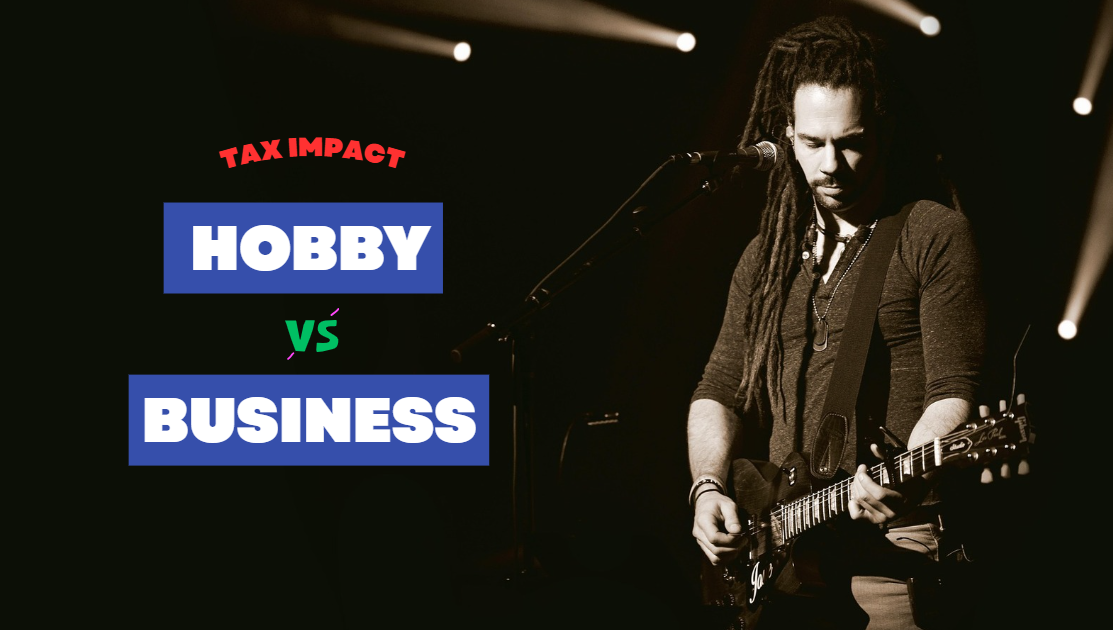
If you earn money from music, you probably think of it as a business. But the IRS might not agree. For tax purposes, they draw a clear line between a hobby and a business, and that classification determines whether you can deduct your expenses. Understanding where you fall can save you money—and headaches—when tax time arrives.
DISCLAIMER: These are general guidelines. Don’t rely on us for legal or tax advice. Consult a professional and protect yourself.
The Hobby Loss Rule in Simple Terms
The IRS assumes that if an activity doesn’t show a profit motive, it’s a hobby. That means you can’t deduct your gear purchases, travel, or studio costs against your income. In contrast, if your music qualifies as a business, you can offset income with legitimate business expenses.
The key difference comes down to intent. The IRS doesn’t expect every artist to turn a profit every year, but they do expect evidence that you’re running your music career like a business.
What Counts as Professional Intent
To demonstrate that you’re serious about making money with music, the IRS looks at several factors:
- Recordkeeping and organization: Do you keep accurate financial records and receipts?
- Business behavior: Do you advertise, distribute, or perform regularly with the goal of profit?
- Time and effort: Are you devoting significant time to writing, recording, and performing?
- Dependence on income: Do you rely on music income to pay bills or reinvest in your work?
- Profit pattern: Have you made money in at least three out of five years?
You don’t need to check every box, but you should be able to show a pattern of effort and professionalism. If you only play a few unpaid gigs and treat your expenses as write-offs, that’s a red flag.
Proving You’re a Business
Keep contracts, invoices, and promotional materials. Save social posts, tour flyers, or emails that show your professional activity. If you sell merch, keep track of inventory and sales. These records paint a picture of genuine business intent, even if your profit margins are small.
If you can show that your goal is to make a profit and that you’re running your music with professionalism, the IRS will usually treat you as a business. That opens the door to legitimate deductions for equipment, studio time, travel, and marketing. The line between hobby and profession? Intent, recordkeeping, and income.
DISCLAIMER: These are general guidelines. Don’t rely on us for legal or tax advice. Consult a professional and protect yourself.