When Shirley Manson steps onto a stage and calls the current state of the music industry “entirely unsustainable,” it hits differently.
It’s one thing for an outsider or a critic to lament how streaming has hollowed out income for artists. It’s another when someone who has broken through, sold millions, and weathered decades of shifts, raises the red flag.
As musicians reading her words, it’s easy to nod along, to feel both vindication and a renewed urgency. Because in so many ways, we are living this unsustainability every day.
What Shirley Is Calling Out (And What We Already Know)
Let’s break down her central claims.
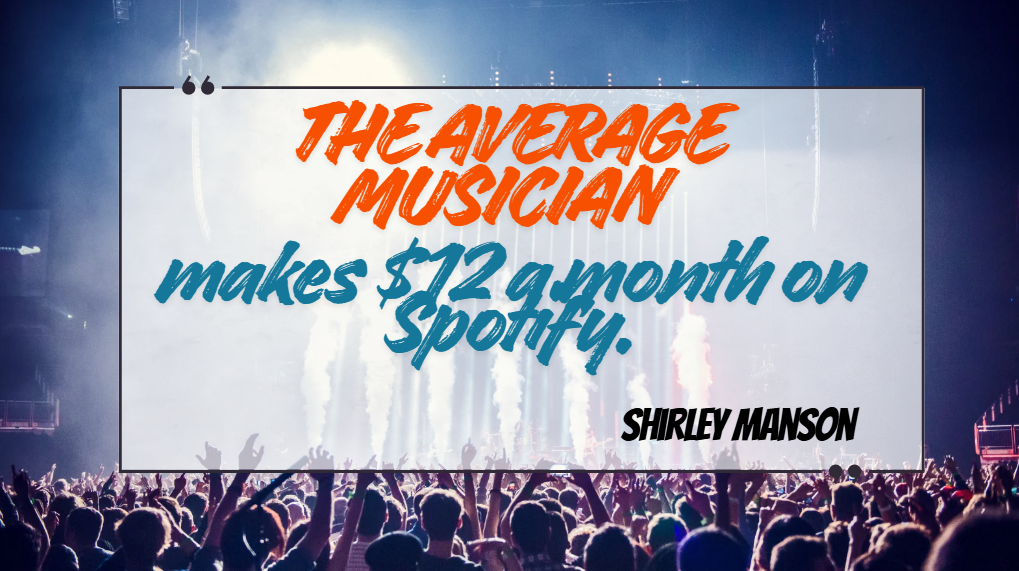
Shirley says, “The average musician makes $12 a month on Spotify.”
That may sound hyperbolic to some, but for many of us, the math isn’t far off. For indie bands, one viral track here or there aside, streaming revenue barely keeps the lights on — much less pays for rent, health insurance, or replacements for broken gear.
She remarks that it’s now nearly impossible for many bands to tour outside major coastal circuits and still turn a profit. For artists in “flyover country” or midsize markets, the cost of travel, lodging, freight, and backline often outweighs the ticket-sale return. You end up subsidizing the shows just to get exposure — and that’s not sustainable for long.
Manson’s rant singles out record labels, Ticketmaster, merch companies, etc. are recipients of large payouts while the artist is left with scraps. It’s a painful truth: the more layers between you and the fan, the more value gets siphoned off. The artist carries much of the risk but sees only marginal returns when things go right, and catastrophic losses when they don’t.
Perhaps her most potent warning is for future generations: if this system continues, we’ll lose risk-taking, experimental artists. She warns fans that without change, audiences will miss “a generation of esoteric, risk-taking, creative, adventurous weirdos, rebels, agitators and provocateurs.” San Francisco Chronicle Essentially, only formulaic acts will survive — because the resources for art outside the safe play will evaporate.
What We Must Do — from Within the Ranks
Shirley’s speech is a call to us. It’s not just for fans or industry gatekeepers. Here’s what we — the artists, the bands, the creators — can try, even in a broken system:
Build more direct relationships with fans
Cut out as many middlemen as possible. Use mailing lists, fan clubs, Patreon, Bandcamp. Let superfans pay directly for albums, early access, experiences. The more you control the route from you to them, the less gets eaten en route.
Collaborate for collective power
Artists need to unionize, form cooperatives, pool resources. The power of one is small, but ten or a hundred working together can demand fairness: over streaming payouts, venue contracts, merch terms. Manson noted the “lack of any real unions to protect artists.” San Francisco Chronicle
Rethink touring models
Smaller tours, regional circuits, residencies, festival circuits, hybrid virtual + in-person shows — experiment with sustainable formats. Don’t force the rigid coast-to-coast grind if it kills you.
Advocate for policy change and transparency
We should push for legislation that forces transparency in how streaming payouts are divvied, how label and platform cuts are allocated. We need fairer royalty splits, and an industry standard for how artists are compensated. Public pressure works — when fans understand the imbalance, they can demand change.
Adapt or…
Shirley Manson’s words are stark, but they are not meant to kill hope — they are a warning flare. When she says this may be Garbage’s final big tour, she’s signaling that even those who’ve made it are vulnerable under the current system.