🎧 Three Key Takeaways
- AI-Labelled Music Evokes More Positive Emotions
Contrary to expectations, listeners reported stronger feelings of happiness, interest, awe, and energy when songs were labelled as AI-generated.
- No Evidence of Negative Bias in Overall Evaluation
Ratings for liking, quality, and deeper experiential responses (like immersion or desire to re-listen) showed no significant difference between AI-labelled and human-labelled music. - Perceived Authorship Influences Emotion, Not Engagement
While composer identity affected emotional reactions, it didn’t impact sensorial, imaginal, or behavioral responses—suggesting listeners may be emotionally open to AI music but not deeply engaged.
The rise of AI-generated music has sparked both excitement and skepticism. Can machines truly compose songs that move us? A new study published in Computers in Human Behavior: Artificial Humans challenges the assumption that listeners inherently devalue music created by artificial intelligence.
Researchers Suqi Chia, Andree Hartanto, and Eddie M.W. Tong set out to test whether people rate pop songs differently based on who (or what) they think composed them. In a clever twist, all eight songs used in the study were generated by AI, but half were randomly labelled as “human-composed” and the other half as “AI-generated.” This allowed the researchers to isolate the effect of perceived authorship from the actual musical content.
The results were, well, surprising.
Songs labelled as AI-generated were rated significantly higher in emotional dimensions like happiness, interest, awe, and energy. This contradicts the common narrative that AI music feels “soulless” or emotionally flat. Instead, it suggests that listeners may be intrigued or even energized by the idea of AI creativity.
However, this emotional boost didn’t translate into deeper engagement.
Measures of liking, perceived quality, sensorial responses (like tapping along), imaginal responses (mental imagery), and experiential immersion showed no significant differences between the two labels. Likewise, listeners’ desire to re-experience the music or purchase it remained unaffected. In short, while AI-labelled music sparked more positive emotions, it didn’t make people more attached to the songs.
The authors suggest that novelty and curiosity could play a role—especially among younger, tech-savvy participants. The study sample consisted entirely of university students, a group likely more familiar with and receptive to AI technologies. As AI becomes more embedded in everyday life, emotional resistance may be fading.
Maybe that’s why AI artists like Xania Monet are signing major record deals.
Still…
Importantly, the study also highlights the limits of emotional engagement with AI music. While listeners may feel uplifted or intrigued, they may not experience the same depth of immersion or personal connection as they do with human-composed music. This could be due to AI’s lack of expressive intent or autobiographical depth—qualities that often make music feel meaningful.
Still, the findings suggest a cultural shift. Rather than rejecting AI as incapable of artistry, listeners may be redefining what counts as meaningful musical experience. For artists and producers, this opens the door to hybrid models where AI tools support human creativity without replacing it.
In the end, AI music may not be soulless; it might just be speaking a new emotional language. And as this study shows, we’re starting to listen.
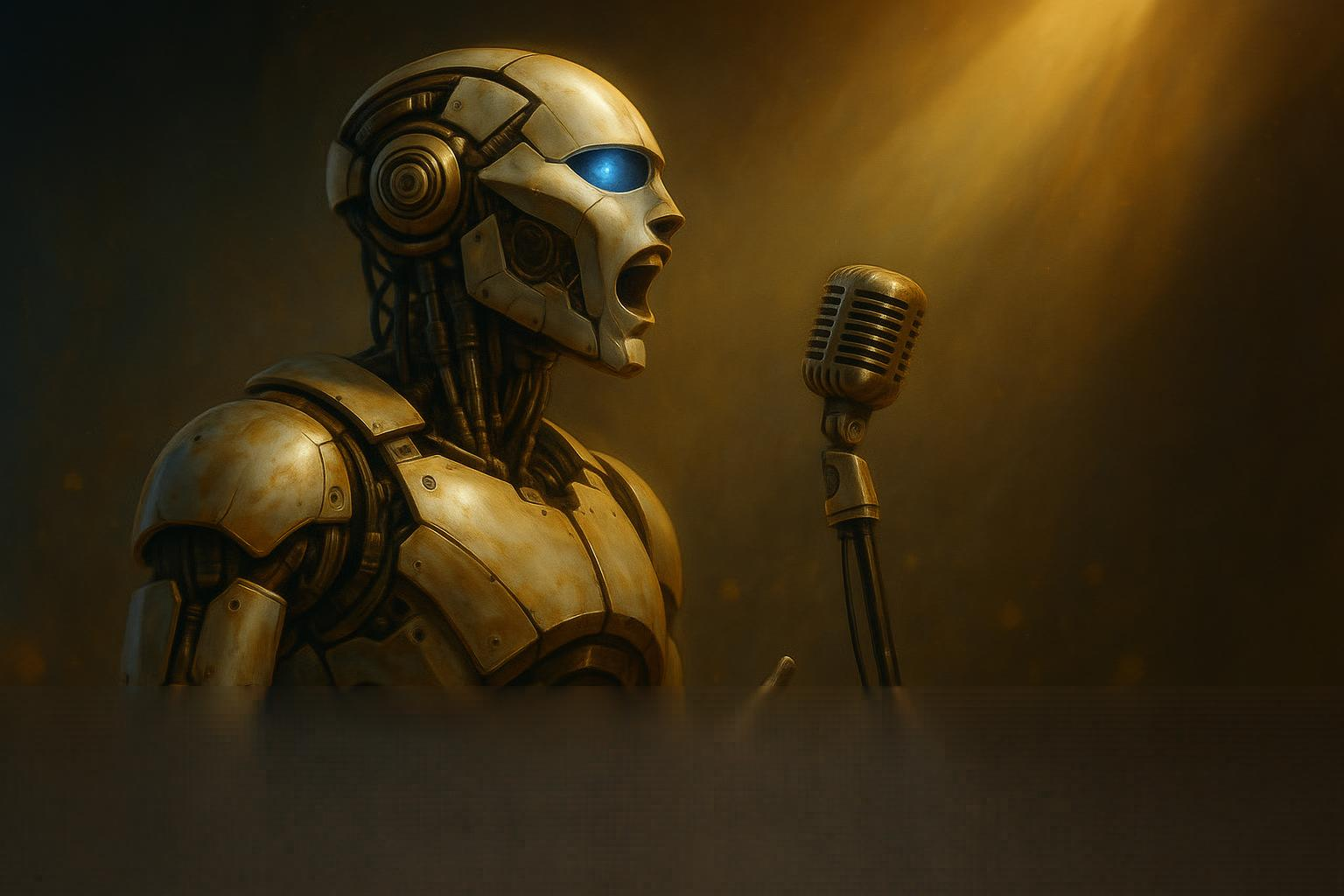
IMAGE: Couldn’t resist. It’s AI from Bing. 😹